... Passer au contenu principal

Professors Without Borders

Our work since 2016

Programmes

Since our start we have reached more than 4,700 students in over 16 countries. These programmes last between three days and two weeks and run according to the LSE Summer School. Ils se composent de plusieurs cours courts pour les étudiants et d’ateliers destinés aux enseignants.

We operate programmes upon the invitation of a host university. We work closely with them to develop a subject-agnostic and skills-focused programme that suits and benefits their students and reflects the local context. Typically, our workshops are designed for about 25 participants, and we ensure they stay accessible to a broader audience. In this way we reach the heart of a small community.

4,700+

Students reached

16+

Countries

1–2 wks

Typical programme length

25

Participants per workshop

Upcoming programmes

AI and community-based education at the University of Global Health Equity Rwanda

October 2026

University of Global Health Equity, Rwanda

Bringing together AI and community-based education, this programme will explore practical ways to strengthen teaching, learning and engagement with the communities served by the University of Global Health Equity. Faculty will develop practical skills for integrating AI into teaching and professional practice, considering how digital tools can support learning, decision-making and innovation while being used thoughtfully and responsibly. Alongside this, participants will explore community-based education, connecting academic learning with local needs and experiences while considering the social factors that shape health and access to care. Through interactive sessions, practical exercises, case studies, reflection and community problem-solving, participants will connect new approaches with real-world challenges.

Our latest programmes

Delivered in 2026

Teacher training at URDT Girls’ School Uganda

Septembre 2026

URDT Girls’ School, Uganda

At URDT Girls’ School, the programme focused on strengthening how teachers plan, deliver and assess meaningful learning. Educators explored purposeful pedagogy, curriculum design, lesson planning, active learning and learner agency, while considering how to move beyond simply delivering information and create lessons that encourage participation, curiosity and deeper learning. Storytelling became one practical approach, helping teachers bring their subjects to life by using stories to explain ideas, connect lessons to learners’ experiences and make learning more memorable. Alongside this, educators explored digital learning, digital tools and AI, considering how accessible technology can support teaching and learning without relying on expensive or sophisticated resources.

AI in agriculture and sustainable tourism at African Rural University Uganda

Septembre 2026

African Rural University, Ouganda

The programme at African Rural University brought together Artificial Intelligence in agriculture and sustainable tourism to explore practical approaches to rural development. Participants explored how AI can support agriculture through precision farming, agricultural data, crop health monitoring, climate-smart technologies and improved decision-making. Alongside this, they learned how to identify community assets and develop them into authentic tourism experiences, exploring storytelling, project design, partnerships and marketing for community-led tourism. Through demonstrations, case studies, group work and field learning, participants connected these ideas to the challenges and opportunities within their own communities.

Climate-smart agripreneurship training with Africa Healing Foundation in Kenya Kenya

août 2026

Africa Healing Foundation, Kenya

Cette formation de perfectionnement organisée avec l’Africa Healing Foundation au Kenya passe de l’agriculture adaptée au changement climatique à l’entrepreneuriat agricole adapté au changement climatique, en s’appuyant sur les compétences en agriculture durable acquises lors des programmes précédents. L’objectif est clair : transformer les bonnes pratiques agricoles en entreprises viables. Alliant théorie, exercices pratiques et travaux de groupe, le programme guide les participants dans l’identification des véritables défis agricoles, la conception de solutions et la concrétisation de ces idées sous la forme de concepts simples de « produit minimum viable ». Les thèmes abordés vont de la planification d’entreprise à la gestion budgétaire des exploitations agricoles, en passant par le « design thinking », le prototypage, le marketing et la communication avec les clients, sans oublier l’élaboration d’un plan d’action pour clôturer la semaine. À l’issue de cette formation, les participants disposeront d’idées concrètes d’entreprises agroalimentaires, de plans de commercialisation de base et de plans d’action individuels favorisant la génération de revenus, la durabilité et la résilience des communautés.

Woman Farmer Foundation training in Eswatini Eswatini

août 2026

Woman Farmer Foundation, Eswatini

Professors Without Borders will partner with the Woman Farmer Foundation (WFF) in Eswatini to deliver a four-day training on building climate-resilient and entrepreneurial young women in agriculture. Young women farmers, rural youth and emerging agripreneurs will learn to conserve soil and water, apply renewable energy on the farm, and turn a harvest into a viable business through budgeting, value addition and market access. The programme runs on two tracks. One is technical, building climate-smart farming skills. The other is entrepreneurial, using design thinking to turn ideas into business models, backed by financial literacy and ethical entrepreneurship. A Training of Trainers component lets participants carry what they learn back to their own communities.

AI skills training with Nhloso Likusasa Le’lichakazile in Eswatini Eswatini

Juillet 2026

Nhloso Likusasa Le’lichakazile, Eswatini

This third programme with Nhloso Likusasa Le’lichakazile (NLL) turns to practical AI skills for career readiness. Eswatini’s youth are more educated than previous generations, yet unemployment remains high, and employers increasingly cite a lack of digital literacy as part of the problem. The training reaches young people, job seekers, students, aspiring entrepreneurs and early-career professionals across the country. Through guided demonstrations and practical exercises, the programme introduces participants to generative AI tools that support CV writing, professional communication and the development of career materials. Responsible use runs throughout, with attention to critical thinking and digital privacy.

Students and faculty at Ekiti State University Nigeria

Juillet 2026

Ekiti State University, Nigéria

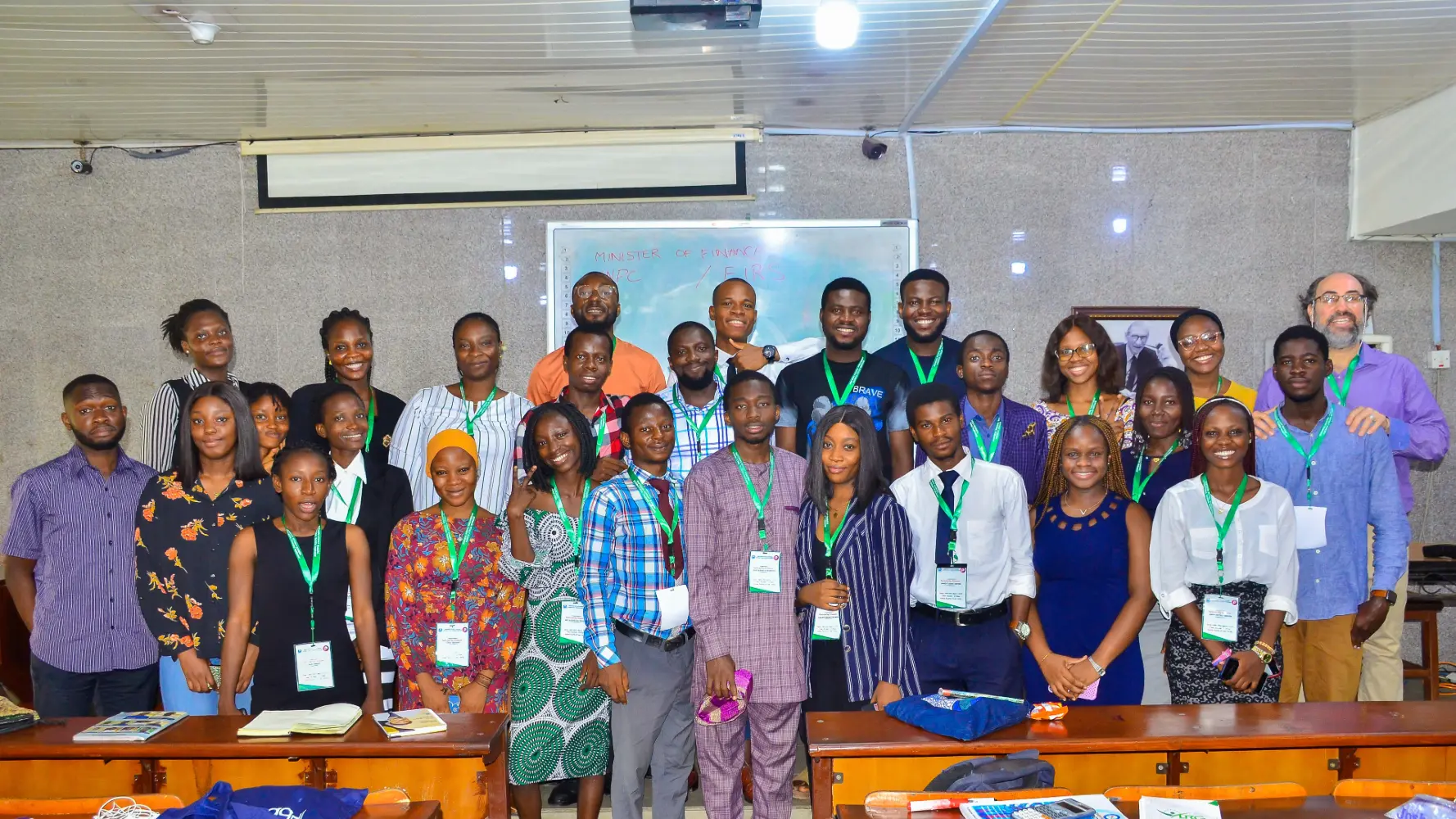
At Ekiti State University, this year’s programme reflected a shared commitment to preparing both students and faculty for the opportunities and challenges of a changing world. Students developed practical skills in social entrepreneurship, career development, and personal finance, while faculty explored research methods and practical applications of artificial intelligence in higher education. Beyond the classroom, the programme encouraged participants to think more intentionally about their professional growth, equipping them with greater confidence to communicate ideas, embrace new technologies, and continue learning throughout their careers.

Career readiness sessions at the University of Lagos Nigeria

Juillet 2026

University of Lagos, Nigéria

Building on a partnership that began in 2022, this year’s programme focused on preparing students for the opportunities and challenges they will encounter after graduation. Sessions combined personal finance, career readiness, and social entrepreneurship, encouraging participants to think critically about financial decisions, entrepreneurial opportunities, and the skills employers value in an evolving world of work. By the end of the programme, many reported greater confidence in presenting ideas, planning their careers, and approaching problems with a more entrepreneurial mindset.

AI for economic research at the University of Cape Coast Ghana

Juin 2026

University of Cape Coast, Ghana

Professeurs Sans Frontières s'est associé à l'Université de Cape Coast pour proposer un programme consacré à l'utilisation de l'intelligence artificielle afin de renforcer la recherche économique, l'analyse et l'évaluation des politiques publiques. Les enseignants et les étudiants de troisième cycle ont appris à utiliser des outils d'IA pour la modélisation économique et l'évaluation d'impact, en travaillant sur des problématiques de recherche concrètes. Les sessions ont associé des bases techniques solides à des exercices pratiques, permettant aux participants de repartir avec de nouvelles approches pour leurs travaux de recherche, leurs analyses et leur enseignement.

Academic City University students in an AI workshop Ghana

Juin 2026

Academic City University, Ghana

Professors Without Borders partnered with Academic City University in Accra to deliver an innovative programme exploring how Artificial Intelligence could enhance teaching, learning, and entrepreneurship. Faculty examined practical ways to integrate AI into assessment while maintaining academic integrity and fostering critical thinking. Meanwhile, students gained hands-on experience through the Student Champions initiative, which promoted the responsible and ethical use of AI across the university community. Aspiring entrepreneurs also applied design thinking and AI-driven innovation to develop practical, high-impact solutions.

Programme archive

Every programme we have delivered with our partners since 2022.

Nov 2025University of KigaliRwanda
Nov 2025University of Global Health EquityRwanda
Nov 2025Nari Sewa SamitiIndia
Oct 2025Movement for Youth and Children’s RightsSierra Leone
Oct 2025EcolotripSenegal

Bring a programme to your institution

We work with host universities and local partners to shape each programme around their students, their faculty, and their context. Tell us what your community needs.