 Passer au contenu principal


April – June overview
Introduction
A Word from Our Co-Heads of Programmes
Welcome to our second quarterly Impact Report! In case you missed it, we worked with Stop Hunger on an NGO leadership bootcamp in January which you can read in our Leadership Lab Impact Report.
This is the second year we are returning to Ghana and it is so great to build on the foundations of last year, helping to upskill both students and faculty in AI. With tech giants in the US getting ever bigger, we believe it is important that everyone gets equitable access to this technology and feels empowered to use it ethically, sustainably and, ultimately, for social good.
Also included in this report is a summary of the Women in Higher Education Fellowship, our flagship fellowship programme that supports women at all levels in academia to flourish. Over the course of the year, they get to share their challenges, learn from experts and build their network through mentorship. Reading their stories are particularly inspiring, and we are poised to see what our fellows do next.
The remainder of our year looks busier than ever, but in the meantime I hope you enjoy reading about the inspirational people we are proud to work with.
Emily Bastable Co-Head of Programmes and M&E lead
Looking through this impact report, I am moved by an incredible feeling of purpose. Educate. Empower. Inspire. This mantra animates everything you see in these pages. Take a few minutes to read the stories and feel the impact we have. This impact is why we started organising programmes in early January and will continue through the rest of the year, and then do it all again next year and the year after that. Educate. Empower. Inspire. It's as simple as that.
Bob Eckhart Co-responsable des programmes

![[Temporary stand-in - second photo not yet provided]](https://prowibo.org/wp-content/uploads/2026/07/Q2-Report-3-1.png)
WiHE Fellowship
Empowering Women in Higher Education
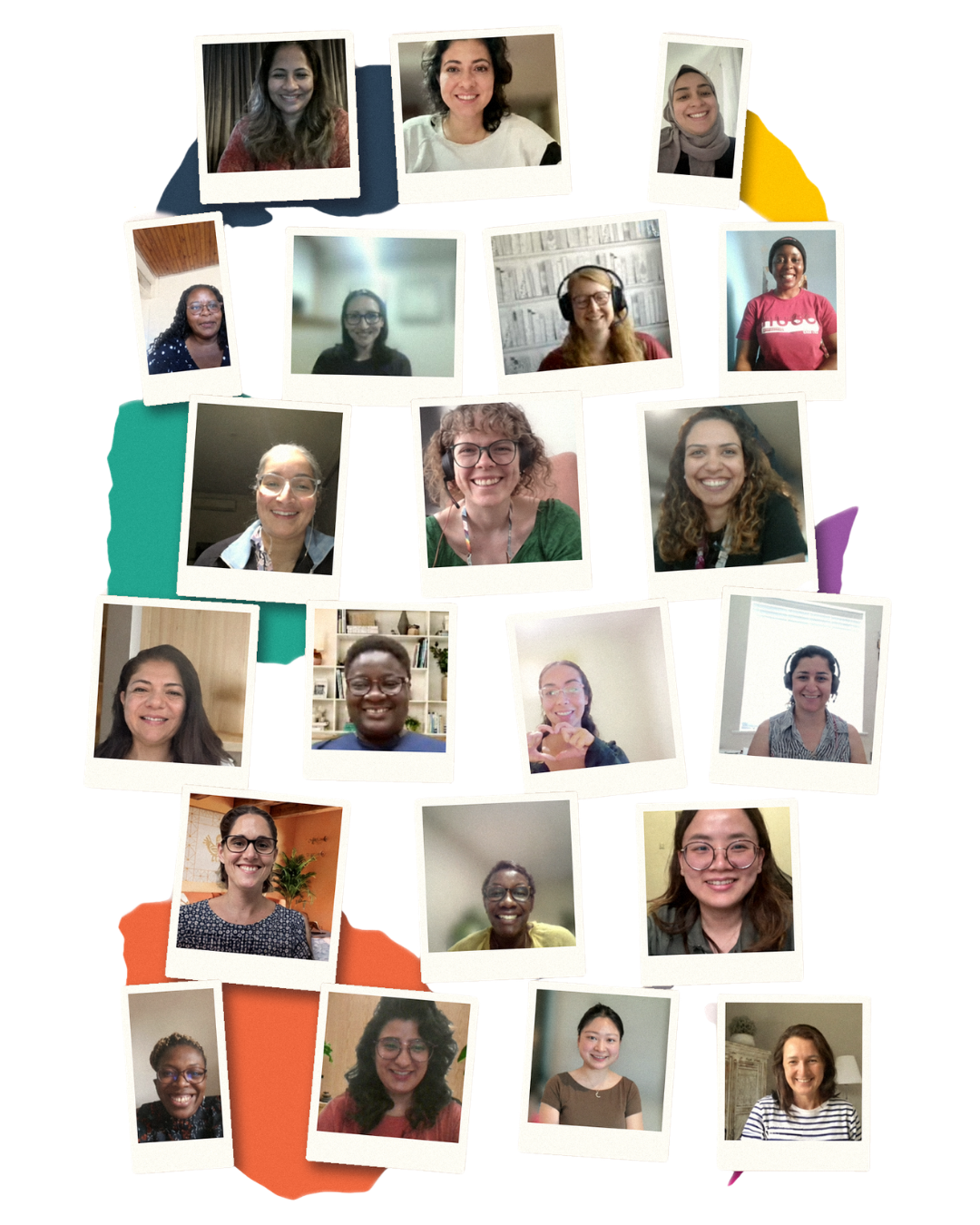
2025-2026 CohortThe Women in Higher Education (WiHE) Fellowship brought together a global cohort of twenty women for professional development, networking, mentoring, and peer exchange. Fellows ranging from PhD researchers and teaching faculty to administrators and early-to-mid-career professionals gathered for a ten-month online experience. Hosted by Dr Julia Sargent (UK) and Dr Ilka Kostka (USA), and supported by Professors Without Borders under the leadership of Dr Caroline Varin, the Fellowship was designed to celebrate and give voice to women in higher education while addressing the real and recurring challenges they face.
Offered at no cost, the programme also aimed to make mentoring and growth accessible to women regardless of where they are in the world or in their careers. As such, the Fellowship is built around a vision of empowerment and interdisciplinary exchange in a community that is both safe and genuinely supportive. The Fellowship offered a varied programme designed to foster learning and connection. Fellows participated in monthly one-hour virtual seminars led by expert women from across global institutions. Small group mentoring sessions, facilitated by a team of four volunteer mentors, offered a more intimate space for reflection, guidance, and personalised support. Fellows reflected on talks and mentoring sessions by posting in a shared Padlet. The programme was further shaped by a mid-year recap that gave the cohort a chance to pause and reflect on their journey together, before culminating in an end-of-year celebration that honoured both the growth and the community built across ten months.
Looking ahead, the Fellowship will welcome its next cohort with even greater momentum. Applications for the upcoming year significantly increased compared to the previous year, which reflects a growing recognition of the programme and the need it meets for women in higher education. This enthusiasm is a clear signal that the Fellowship is resonating and that the community it is building is one that women across the world are eager to be part of. The core elements that have shaped the Fellowship will carry forward into the next cohort, and the team is exploring different mentoring opportunities to further strengthen the support available to Fellows.
Our Outcomes for our WiHE Fellows
Networking
of fellows agreed they have been able to expand their network
Mentorship
of fellows agreed the mentoring was helpful
Communauté
of fellows agreed they felt a sense of community
In the words of our fellows
"I joined the fellowship because I really needed a community at that stage and then I joined the fellowship. First thing it did for me was it gave me that sense of, there are other women and they are thriving where they are...it gave my back my zeal for continuing in academia."
WiHE Fellow, 2025-2026
"The mentoring groups created a supportive environment for open discussion, learning, and reflection. Hearing different perspectives from fellow participants helped me think more strategically about leadership challenges and opportunities. The mentors were approachable, insightful, and generous in sharing their experiences."
WiHE Fellow, 2025-2026
"The session on how to market yourself on social media...I've totally changed my LinkedIn profile. And I just have seen that there is a huge difference that people who are with me through LinkedIn, they have seen my journey, who I am."
WiHE Fellow, 2025-2026
"It was eye-opening, enriching and empowering. I realised that irrespective of nationality we face the same problems. Our voices are not heard..."
WiHE Fellow, 2025-2026
"I joined the fellowship because I really needed a community at that stage and then I joined the fellowship. First thing it did for me was it gave me that sense of, there are other women and they are thriving where they are...it gave my back my zeal for continuing in academia."
WiHE Fellow, 2025-2026
"The mentoring groups created a supportive environment for open discussion, learning, and reflection. Hearing different perspectives from fellow participants helped me think more strategically about leadership challenges and opportunities. The mentors were approachable, insightful, and generous in sharing their experiences."
WiHE Fellow, 2025-2026
"The session on how to market yourself on social media...I've totally changed my LinkedIn profile. And I just have seen that there is a huge difference that people who are with me through LinkedIn, they have seen my journey, who I am."
WiHE Fellow, 2025-2026
"It was eye-opening, enriching and empowering. I realised that irrespective of nationality we face the same problems. Our voices are not heard..."
WiHE Fellow, 2025-2026
Ghana
Creating AI Futures in Ghana
We first visited Ghana last year, and are thrilled to be back with both partners.

![[Temporary stand-in - second photo not yet provided]](https://prowibo.org/wp-content/uploads/2026/07/Q2-Report-6-1.png)
Last year at Academic City University (ACU) our Co-Head of Programmes, Emily, delivered an introductory session on AI in Education. One year on, the faculty and students are keen to build AI into their teaching and learning. Enter Dr Joy Mutegi and Dr Jawad Khan to continue the conversation...
Using AI well, across a whole institution, is hard. Who decides how students should use these tools? How do you mark an essay fairly when one can be generated in thirty seconds? Move too fast and the values that should guide all this get left behind.
A major focus of our programme with ACU covered assessment: helping staff design work that genuinely tests learning, with rules understood by all. To ensure responsible practice spreads throughout the campus, we trained 30 Student Champions to share good habits with their classmates and peers.
The following week, our work continued at the University of Cape Coast (UCC), hosted by the Department of Data Science and Economic Policy in the School of Economics. In the first week, Jawad Khan guided graduate students and faculty through integrating AI into their academic workflows: engineering effective prompts, recognising hallucinations and algorithmic bias, and building research practices that are both efficient and reproducible.
Taken together, these programmes have strengthened AI confidence across two very different Ghanaian universities, from a young private institution built around innovation to the country's top-ranked public university. We are proud to contribute to a future where Ghana's educators, researchers, and graduates can engage with AI critically, ethically, and with confidence.
Our Outcomes for ACU Learners
Students plan to use AI tools in entrepreneurial activities
Teachers plan to integrate AI into their existing assessment practices
In the words of our beneficiaries
"Before this program, I thought I had a pretty strong understanding of how to use AI. This program thought me more about how to better use AI as a research aid as well as different AI tools in just 2 hours. It's a programme I would definitely recommend to others."
Feedback from ACU
"The programme has brought up ways we can take advantage of AI for effective teaching. The need to find alternative ways of assessment, without the students practicing 'copy and paste'."
Feedback from ACU
"AI can be a very helpful assistant in the research process. You must drive it, and not allow it to drive you."
Feedback from ACU
"Before this program, I thought I had a pretty strong understanding of how to use AI. This program thought me more about how to better use AI as a research aid as well as different AI tools in just 2 hours. It's a programme I would definitely recommend to others."
Feedback from ACU
"The programme has brought up ways we can take advantage of AI for effective teaching. The need to find alternative ways of assessment, without the students practicing 'copy and paste'."
Feedback from ACU
"AI can be a very helpful assistant in the research process. You must drive it, and not allow it to drive you."
Feedback from ACU
Ghana
Communicating Policy Impact
UCC has been ranked multiple times by the Times Higher Education World University Rankings as the number one university in Ghana and West Africa.
When Professor Ernest Fokoué landed in Accra on a rainy Saturday in June, a reception team from the University of Cape Coast (UCC) was waiting at the airport. By Monday morning our educator had toured the campus, met the Dean of the School of Economics, and was ready to teach.
Professor Fokoué, a professor of statistics at the Rochester Institute of Technology, spent the week leading an intensive workshop on Bayesian Networks and Impact Evaluation in Economics. Each day followed the same rhythm in the Old Academic Board Chamber: a morning of lectures, then an afternoon in the lab, where faculty, researchers, and graduate students put every concept straight into practice in R.
What made the week distinctive was its insistence on local relevance. No idea was presented without its code running live, and every method met a Ghanaian or African dataset within minutes of being introduced. Participants modelled poverty and education using Ghana's national living standards survey of over 14,000 households, and evaluated the country's LEAP cash transfer programme as a case study in measuring what really works. From randomised controlled trials to propensity score matching and regression discontinuity design, these are the tools that turn data into evidence for policy.
By Friday, participants were presenting their own mini-projects, each a reproducible analysis they could take home, and the week closed with what Professor Fokoué called the Grand Synthesis: bringing causal evidence and Bayesian modelling together into a single framework. All session materials, lab notebooks, and datasets have since been shared with UCC, where they will support teaching, research supervision, and policy analysis long after the workshop's end.
We are proud to have strengthened the partnership with UCC and to support a generation of economists equipped to bring rigorous, data-driven evidence to the decisions that shape their country.

![[Temporary stand-in - second photo not yet provided]](https://prowibo.org/wp-content/uploads/2026/07/Q2-Report-8-1.png)
Learning highlights
More confidence in applying Bayesian methods to analyse economic trends
More knowledge with using R and impact evaluation methods to solve real-world economic problems
Figures reflect the average change in self-reported values from all respondents before and after the programme.
In the words of our beneficiaries
"Professor Fokoue took his time to explain statistical concepts, he also found time speak to us and motivate us. I was truly touched, I still am."
Feedback from a UCC Student
"It has really helped me to unlock my potential."
Feedback from a UCC Student
"...a successful and substantive five-day capacity-building programme that equipped the School of Economics community at the University of Cape Coast with a rigorous and practically grounded analytical toolkit. Prof. Dr. Ernest Fokoué's facilitation combined methodological depth with conceptual clarity, ensuring that participants engaged with both the technical details and the interpretive principles that make these methods powerful tools for research and policy."
Feedback Report from the Department of Data Science and Economic Policy, UCC
"Professor Fokoue took his time to explain statistical concepts, he also found time speak to us and motivate us. I was truly touched, I still am."
Feedback from a UCC Student
"It has really helped me to unlock my potential."
Feedback from a UCC Student
"...a successful and substantive five-day capacity-building programme that equipped the School of Economics community at the University of Cape Coast with a rigorous and practically grounded analytical toolkit. Prof. Dr. Ernest Fokoué's facilitation combined methodological depth with conceptual clarity, ensuring that participants engaged with both the technical details and the interpretive principles that make these methods powerful tools for research and policy."
Feedback Report from the Department of Data Science and Economic Policy, UCC
Thank You To
Our Local Partners


With Thanks to Our Funders

Download
Explore More of
Our Impact
Current report
Q2 2026 Impact Report
The report you’ve just explored - WiHE Fellowship, our Ghana programmes with ACU and UCC, and the outcomes and stories behind them.
Previous report
Q4 2025 Impact Report
Look back at the previous reporting period - programmes, partnerships, and outcomes.
Official sponsor since 2018
Eight years of safely getting our professors there
Carrier funds and coordinates the flights for the professors who travel to teach our programmes, which is what enables our programmes to run year on year.
Carrier’s vision is to “harness the power of our people and our trips to enable communities at home and around the world to live extraordinary, fulfilled lives.” Travel is what makes a particular kind of connection possible, built over shared meals and coffee between classes. Our volunteers live and teach alongside our partners, as hands-on as this work gets. Seeing the realities and the challenges up close means the support they offer is never guesswork.
That is what a real partnership does for the communities we support: it changes how they think and work, opening up new perspectives and new approaches that unlock what was already possible.
- Funds the return flights for travelling professors
- Coordinates the bookings, routes, and last-minute changes
- Donates 100% of its Black Friday profits, every year since 2021
Read Carrier’s responsibility commitments“We have a strong affinity to Prowibo’s philosophy of championing education for all. Their ambition is to create a community of academics and professionals to share their expertise with students everywhere, and we are proud to embark on this journey with them.”
Carrier, on our partnership
Carrier Luxury Holidays, our longest-standing funder.